What Happens to the Green Can? Insights from Our Agromin and EJ Harrison Green Waste Processing Tour
Part of living an earth-friendly life is being mindful of not only what we consume, but what we dispose of. It’s generally recognized that we need to move from a linear model—take, make, consume, dispose—to a regenerative or circular cycle that ends with recycling, composting, and reuse. Waste companies like EJ Harrison have embraced this shift, encouraged in part by a 2016 California law, SB 1383, that mandates “diversion”: diverting organic waste and recyclable materials out of the landfill. SB 1383 requires 50% diversion of organics from landfill by 2020 and 75% diversion by 2025.*
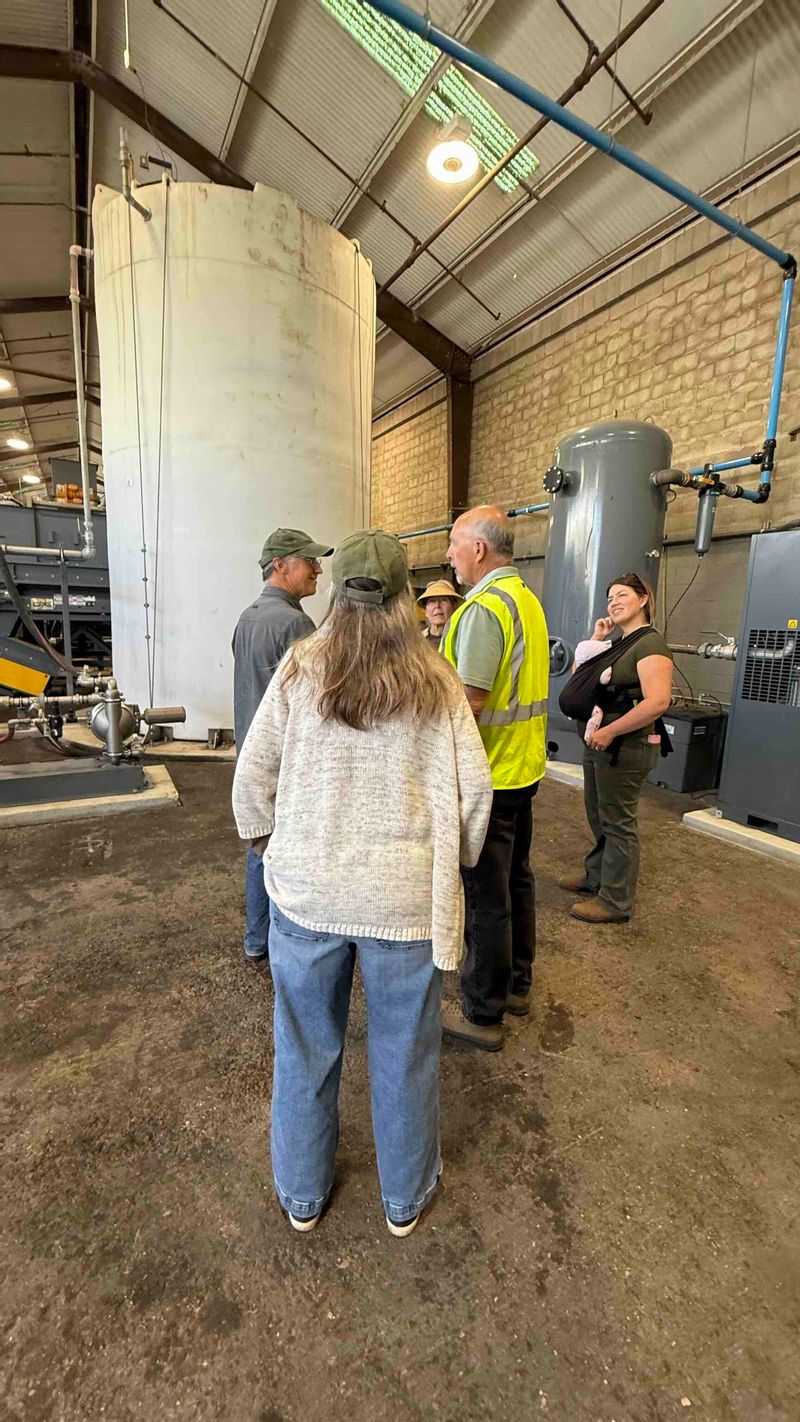
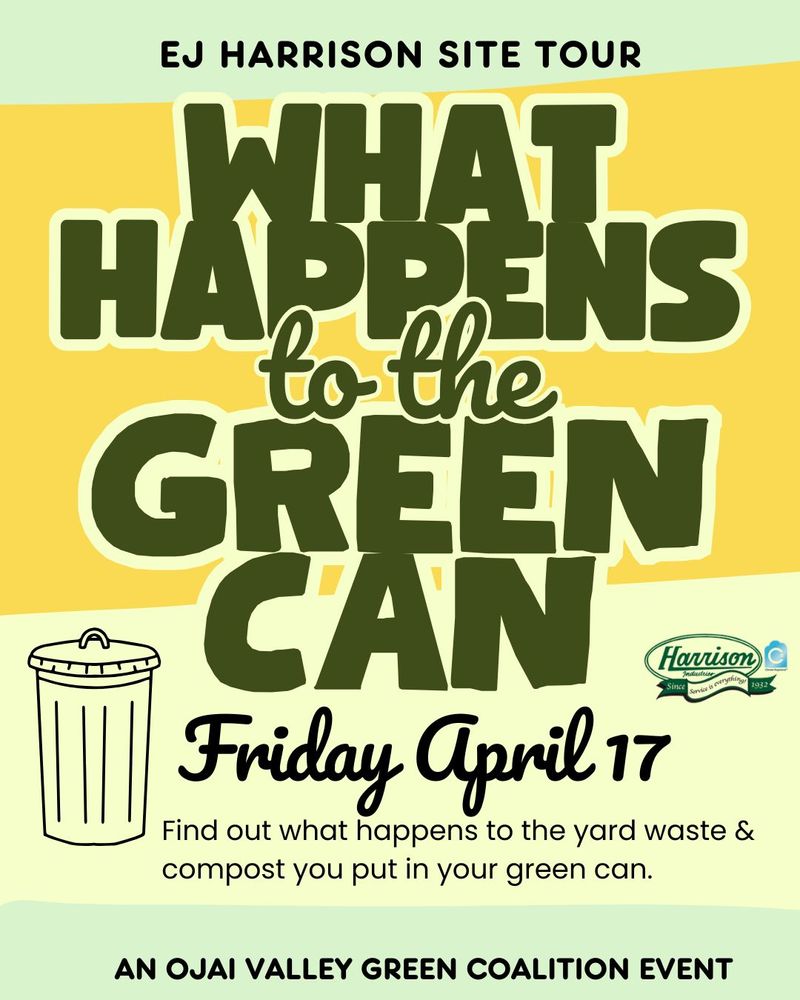
To that end, everyone in California now has a “green can.” This is a third can to place your yard waste and food scraps. Here at the Ojai Valley Green Coalition we were curious what happened on the other end. What is Harrison doing with all those lawn trimmings, leaves, and brush? Why do we need to put our food scraps into a separate bag? So in April, for Earth Month, we set off on a tour of the composting and organic waste processing facilities in Santa Paula and Oxnard, run by Agromin, Harrison’s partner.
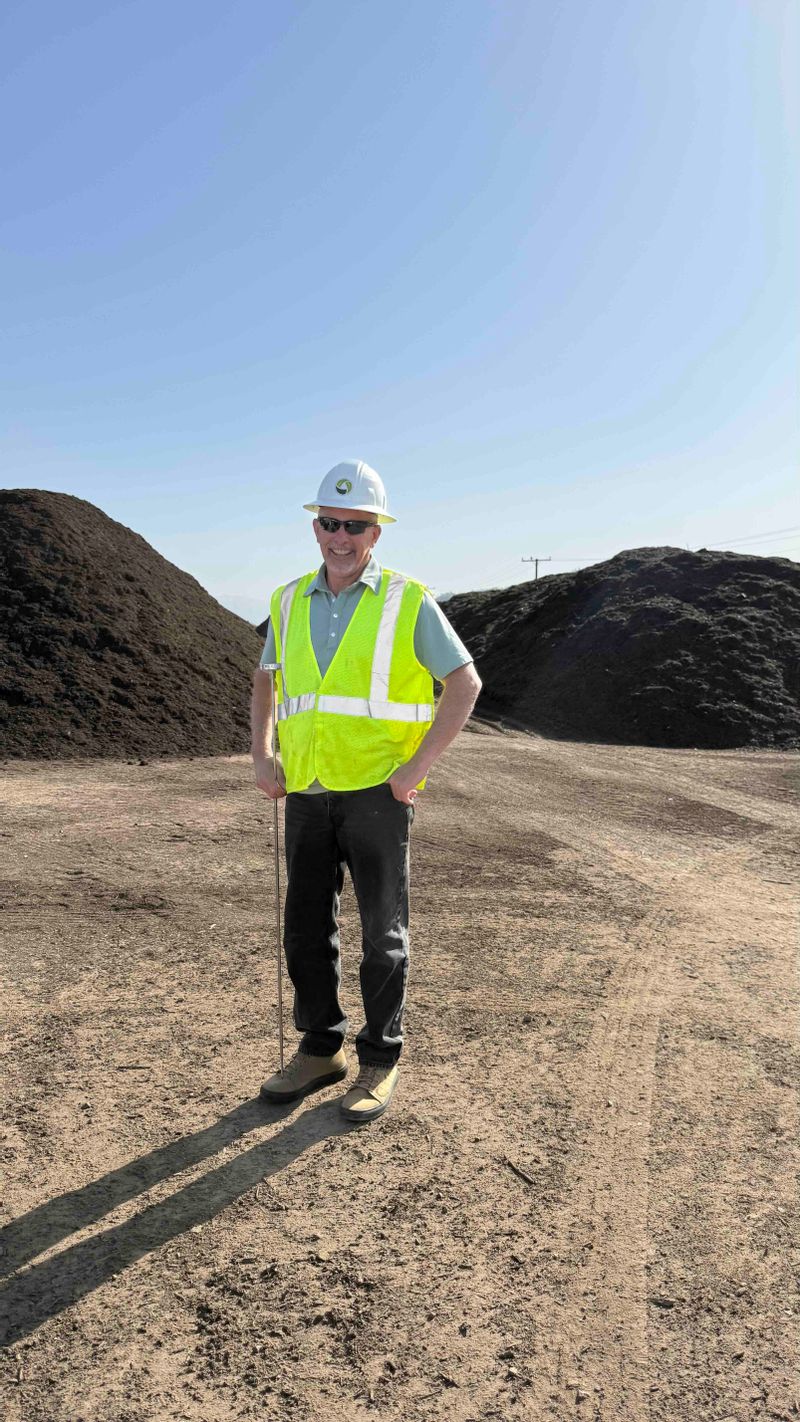
Our tour was led by Chief Operating Officer David Green, a passionate and engaging guide who is really excited about green waste. Agromin has been composting since 1999 and serves over 200 cities in CA, processing 1.3 million tons per year. There are 14 million tons of organic waste collected in CA, out of 27 million eligible tons. That means there are 13 million tons still heading to our landfills. Agromin hopes to close that gap.
The process works like this:
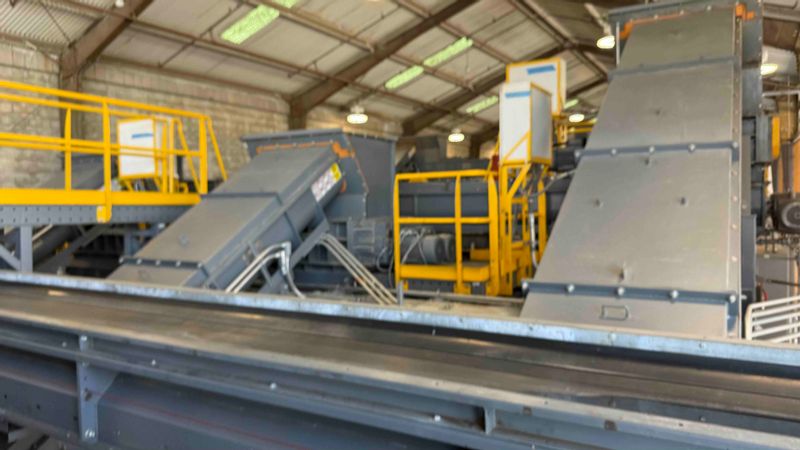
- The contents of the green cans are sent to Gold Coast Recycling and Transfer Station for separation.
- Employees pick out the food waste bags from the green waste, along with any trash or recyclables.**
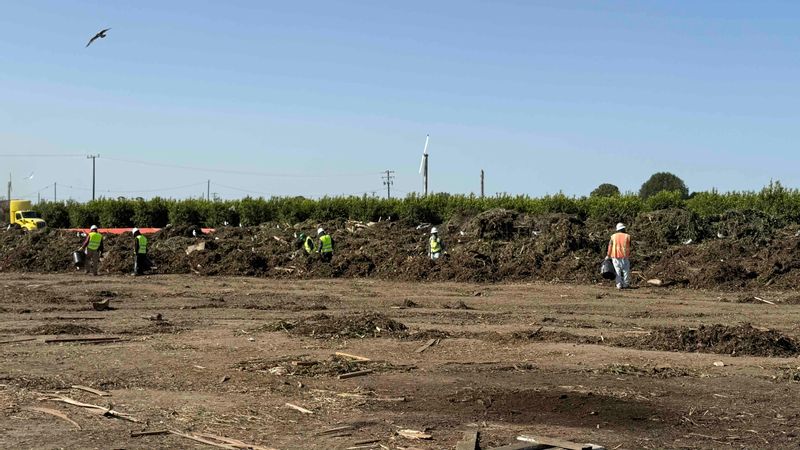
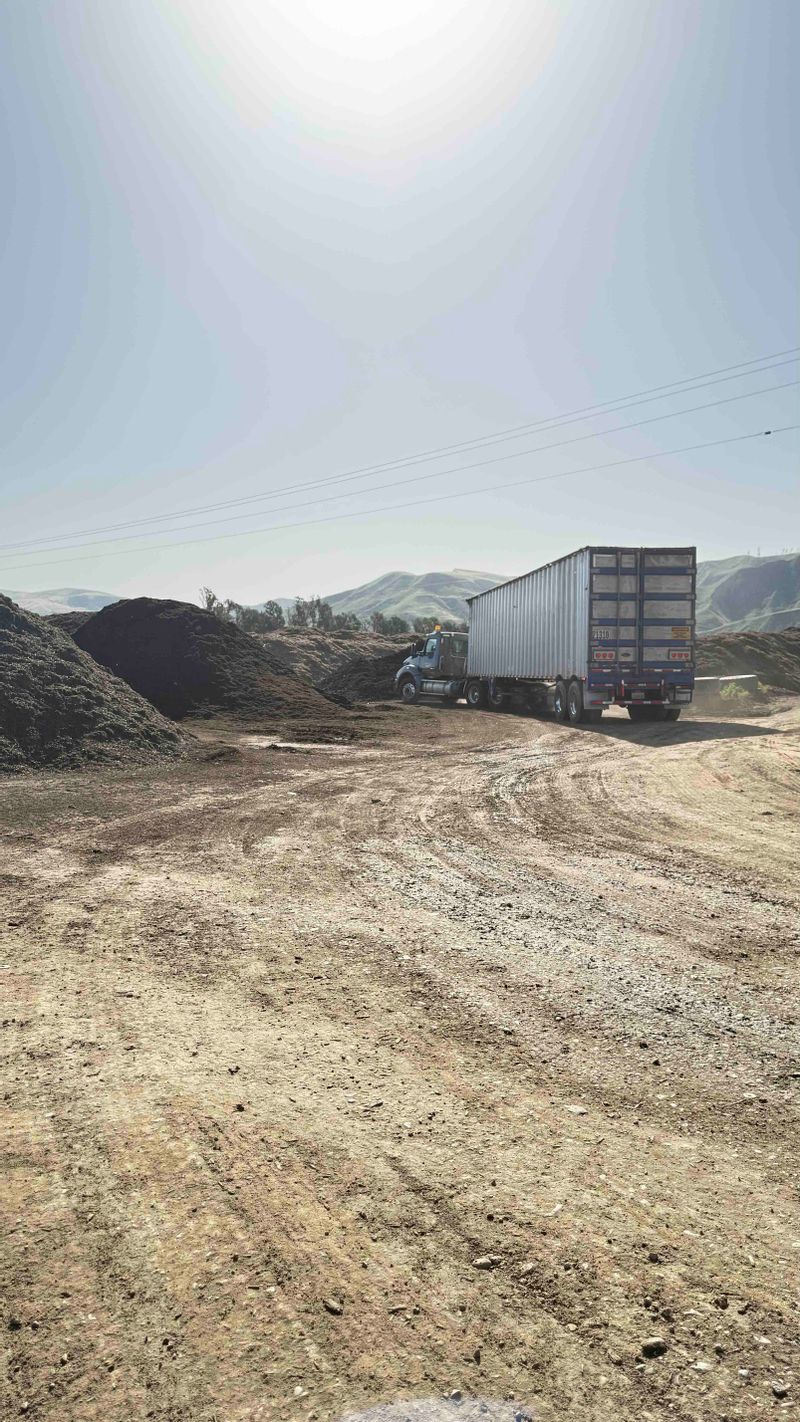
- Green waste—brush, fallen fruit, tree trimmings, etc.—is sent to Agromin’s composting facility at Limoneira Ranch in Santa Paula, where it is turned into mulch, compost and specialized soil products.
- Food waste is sent to a new facility (Mountain View in Oxnard) where it is turned into a slurry that is sent to biodigestors that convert the waste into methane which is used to generate electricity.
Agromin is renovating the facilities at Limoneira and adding their own biodigestor locally, which will remove some of the trucking and manual separation. The electricity generated will power their composting operations, creating a self-sustaining operation.
The operation is very efficient. Soil products are tested multiple times for contaminants by third-party labs, looking for heavy metals, bacteria, and other undesirable traits. Compost is “cooked” (let come to temperature by bacterial activity) at 131 to 160 deg F for at least 15 continuous days. No cooler, as pathogens don’t get destroyed! Any hotter, and there’s a fire risk. The carbon to nitrogen ratio is controlled visually by specially trained “pile managers” (who attend a US Composting Council School). Agromin generally desires a 25% to 35% nitrogen to carbon ratio, but it varies based on the final product they produce.
Waste that comes to Limoneira is from all over Ventura County and also Santa Barbara when their capacity is exceeded. When waste first arrives, a couple decisions are made. One is whether the load is contaminated. They will reject loads upon visual inspection if it appears contaminated (>1%). Some contaminated loads go straight to a 3” screening device and then get sorted again. The second decision is whether it is green waste (higher nitrogen) or browns (higher carbon). High carbon is set aside for grinding and use as mulch. All green waste that arrives has been sorted once before arriving at the Gold Coast or Del Norte transfer stations. It gets sorted again at Limoneira if they suspect it is not clean. This sort is done by creating long piles about 3-4 ft high and 6-10 ft wide. They are turned 3 times and contaminants are manually picked out with each turning. For every 10,000 tons of green waste that comes in, they find 100 tons of contaminants (over 99% diversion).
The whole process is truly impressive, and we all left feeling really confident about using Agromin products in our homes and yards. In fact, using this soil and mulch is an important part of the diversion cycle. Per SB 1383, cities are required to buy back a certain amount of mulch and compost from waste processors, to ensure the end products go to good use. That means that end users, like you and me, can usually get coupons for free mulch, compost, and soil—like the one offered here for EJ Harrison customers of Ojai.
The process isn’t perfect (yet). Our tour guide David hopes the buildout at Limoneria will eventually avoid the need for a separate bag for food waste. In addition, they are constantly dealing with contaminated loads, which impact the quality of their products, but also the health of their workers. They find glass, explosive batteries, even water heaters in green waste! Also, there is currently no facility for handling animal waste in the county. These materials still must be sent to the landfill. And, sadly, California did not meet the 2024 75% diversion goal (42% recycling rate). There is still a ton of usable materials heading straight to the landfill.
However, there are amazing success stories too. David told us how strawberry farmers now use active compost to help in soil disease control, avoiding the need for toxic fumigation methods using methyl bromide and chloropicrin.
It is strange to write after such an “earthy” adventure (smells included!), but the tour left us with a feeling of hope. Laws like SB 1383 really do make a difference—and one on a transformative, societal level. Science is helping us solve the urgent problems of our age. David is using technology like drones to monitor the temperature of his piles, and using AI to drive the processing of the slurry mixes at the Mountain View facility. These innovations are also creating real green jobs in our community. Between Limoneira Ranch and Mountain View, Agromin employs 44 Ventura County residents, including soil scientists and engineers, and trains their workers for these careers. One of their employees has gone from driving trucks to managing operations at Mountain View.
But it all comes back to us. How we vote, what policies we support, and what we put in our trash can—and our green can and blue can—every day. Small choices can make big impacts. We hope this message and story of hope stays with you and makes you think the next time you throw something away.
How You Can Help
- Recognize that human beings are working on the other end. Put the right things in the right cans to make their jobs easier and safer!
- Separate your food waste into plastic or sturdy compostable bags. A human will be picking it out from the yard waste.
- “Food waste” means leftover cooked food, including anything with fat, oil, or meat; bread; stale snacks; dairy; and scrapings from dinner plates. Uncooked vegetable and fruit scraps, including fallen fruit, can go directly in the yard waste can (not in the plastic bag).
- Do not add manure, pet feces, or contaminated pet bedding to the yard waste can.
- Spread the message! Let friends and neighbors know how important this process is to our town, our county, our state, and our planet.
- Consider starting your own home compost! Harrison offers a great service, but every load you send is trucked several times around the county. Keeping your waste local means the benefits stay local too.
*We have not yet met the 2025 goal. You can help!
**Yes, human beings are picking through your trash. Be mindful of their health and safety. The most hazardous items for them are medical waste and batteries, which can explode and start fires. Make sure to take batteries to a proper e-waste facility like the Gold Coast Recycling and Transfer Station. Here’s a list of resources for disposing of medical waste like sharps containers and expired medications.
Click an image below to display the larger version.